Citizen Science
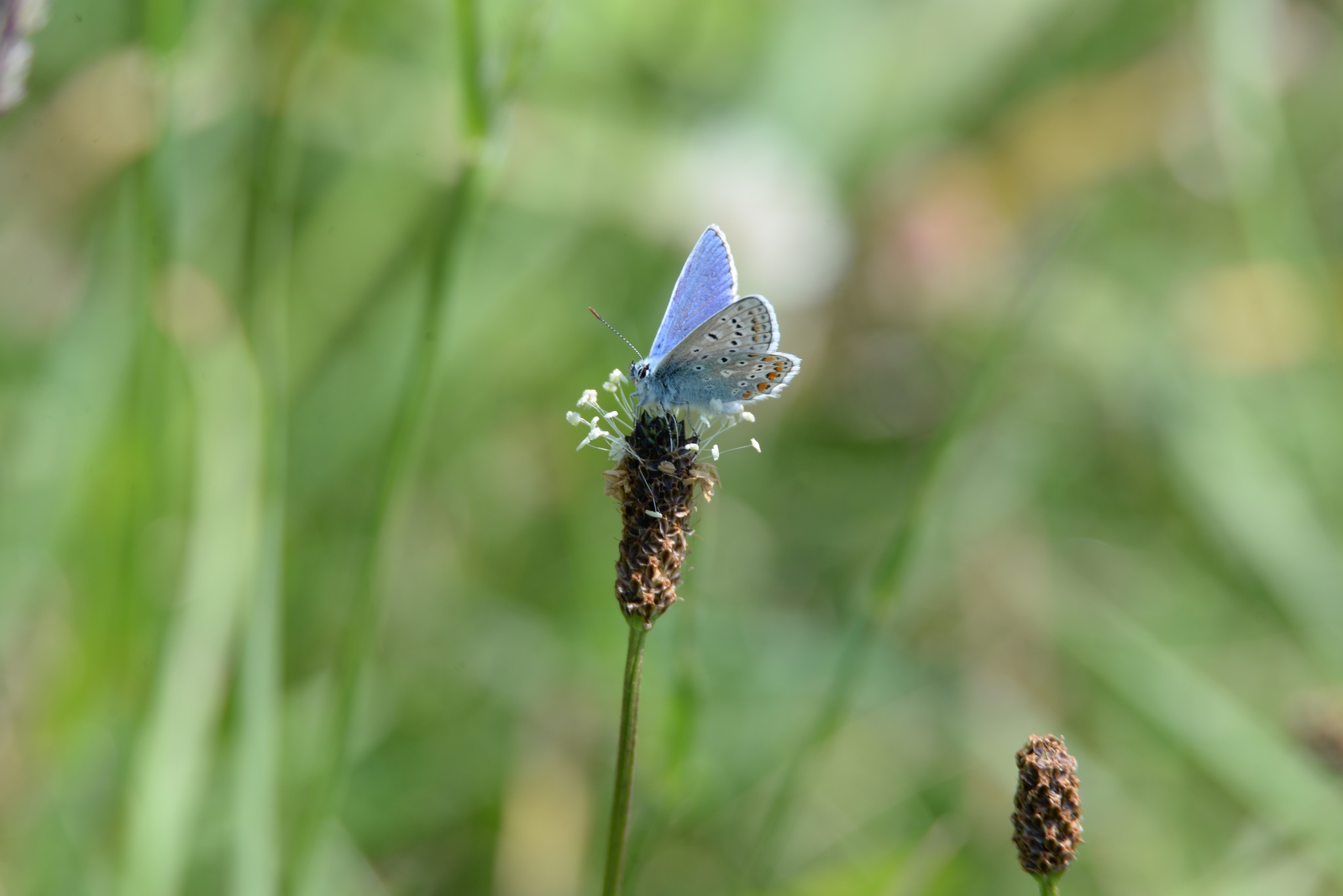
In my free time, I volunteer as a wildlife monitor for BirdWatch Ireland, and National Biodiversity Ireland. BirdWatch Ireland run an annual garden bird survey during the winter months, and is an excellent way to get you started in the world of citizen science. If you walk a particular route during the summer, then the National Biodiversity Ireland butterfly survey is a good one to combine with your walk.
It's easy to overlook the importance of animal species we perceive as “common” but often act as important indicator species. During my teenage and college years I used to wash cars, and washing off ‘baked on’ insects from car bonnets and number plates was always a race against the washer cycle, but you would be hard pushed to find many insects stuck to bonnets or number plates now; even in the past few years, flying insects have declined 54% in Northern Ireland between 2021 and 2023, and a 78% drop in the UK since 2004. Aside from their work as pollinators, insects are an important food web item, and vital in pest control as predators or parasites
Garden Bird Survey
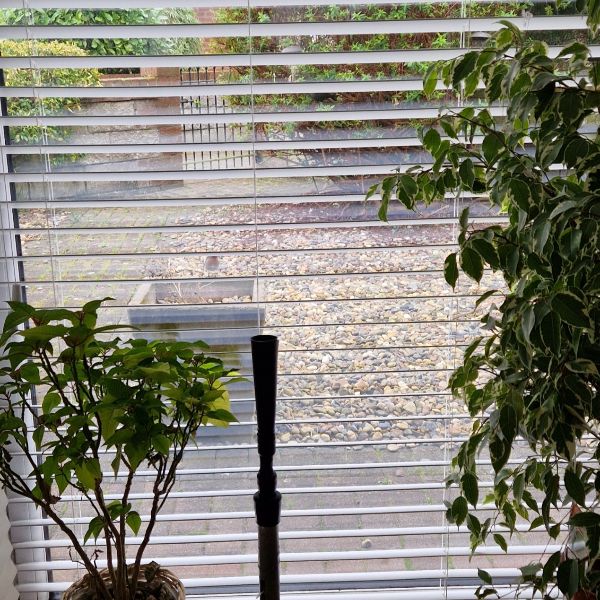
I have participated in every Garden Bird Survey since 2012 at a number of different addresses. Because it’s run in winter, when most home owners set feeders out, birds are attracted to the garden for food, making them easy to count and brings them in from a larger catchment area. And because many people can recognise common garden birds, doing the counts is relatively easy and everyone can participate. Counts are done on a weekly basis and are simply the highest number of birds for that species, in the garden for that week. I have it set up from my home office, so I can see what birds are landing on the feeders throughout the day.
Methodology
The count runs from end of November/start of December to end of February. Every week, the maximum number of birds seen during that week is recorded; each week is a fresh count.
My garden would be considered small. My attractors were fat ball, peanuts, and occasionally – Nyjer seed.
Results
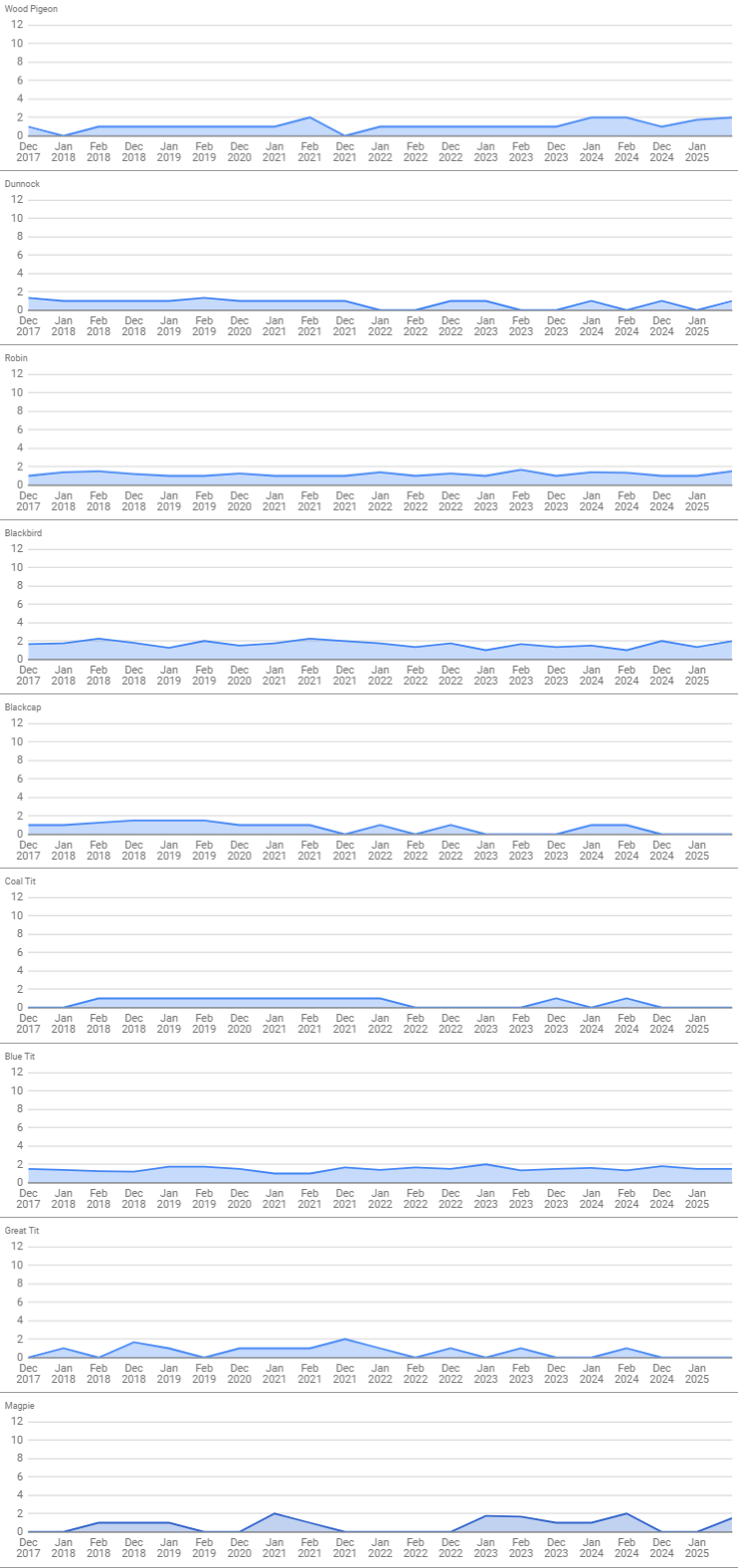
There were three distinct groups of birds; the first were the dyad group, where typically a male and female pair were observed in the garden.
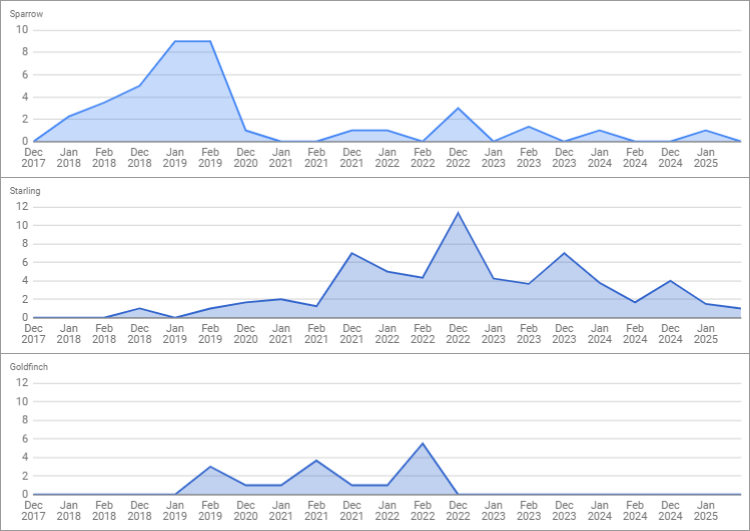
Next were the flock group that comprised Sparrows, Starlings and Goldfinches. This group ebbed-and-flow through the years. The presence of Goldfinches were largely determined by having a Nyjer seed feeder.
- Collared Dove
- Herring Gull
- Song Thrush
- Jackdaw
- Chaffinch
- Hooded Crow
- Wren
- Long Tailed Tit
- Grey Wagtail
Wildcard
The hard to quantify, but certainly can’t be ignored, was the addition of two rescue cats during the Covid summer of 2020 to the household; one cat was a definitive ‘mouser’, but his brother has yet to catch anything. I didn’t track the number of small animals the ‘mouser’ caught, but it must be close to 30 (for one cat); these include house and field mice (particularly baby mice), Robins, Blue Tits, Goldfinches, Wrens, Dunnocks, a Song Thrush, Pigeon and two Goldcrests – the latter species I have yet to see in the garden.
Certainly, since the cats joined the household, the frequency of Blackcaps, Coal Tits, Dunnock, and (maybe) the Great Tit fell. The drop in Sparrow numbers may also be attributed to the presence of the cat in the garden, although they have been a consistent visitor.
Discussion
Even though I have a small garden, there were 21 different species of birds recorded. Aside from Goldfinches, sightings of finches were few and far between. Not one Greenfinch spotted in 7 years, and just a handful of Chaffinch sightings for the same period. The low Chaffinch count was a bit perplexing as they had a 90% occurrence in the 2023 garden bird survey.
While I have seen no birds sick with trichomoniasis, it must be a factor in finch low counts. While I have suggested the cats as contributors to reduced bird counts in my survey, either by direct mortality or scaring birds away, mild winters and low storm activity would also contribute to the ebbs and flow of ‘rare’ bird sightings in the garden.
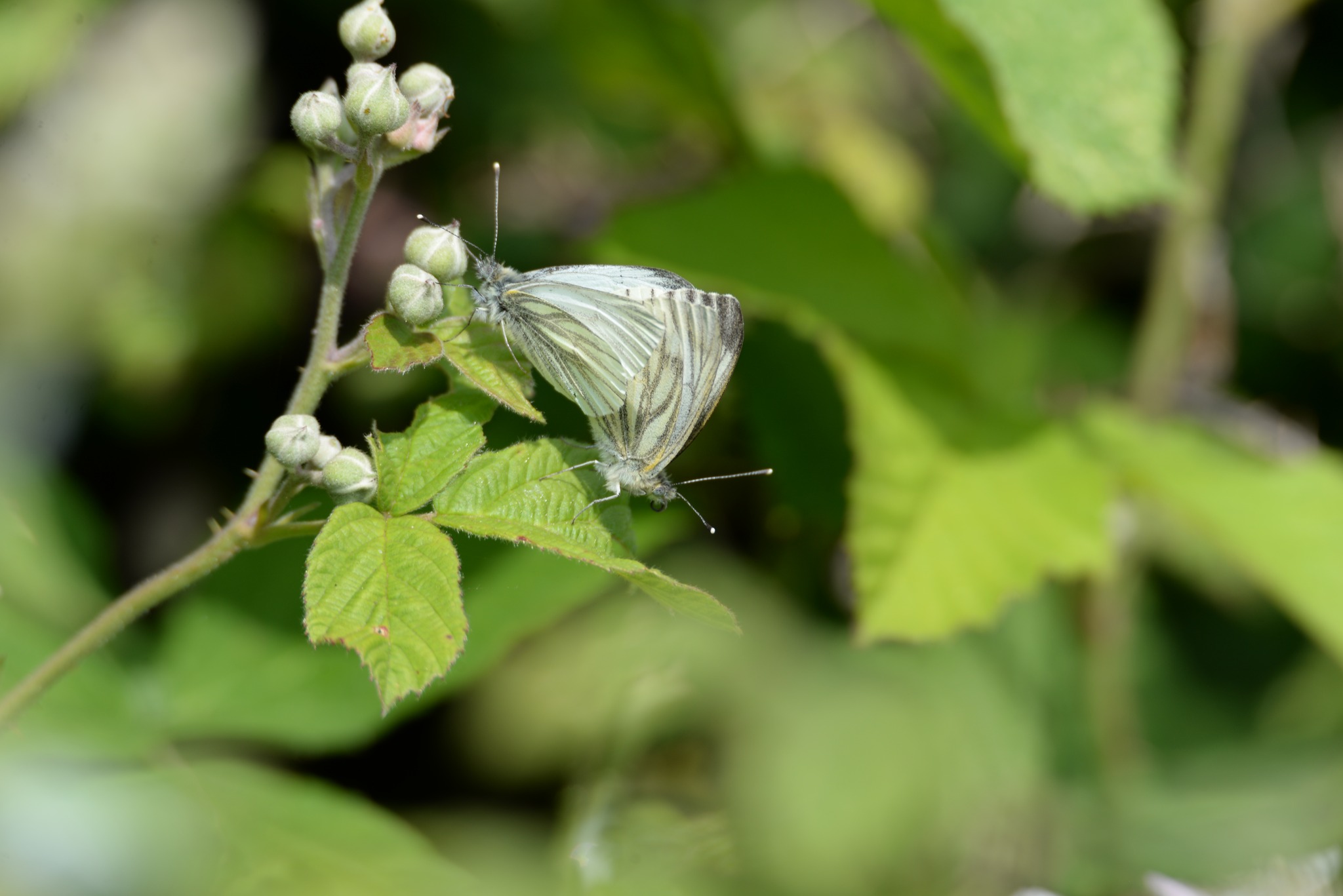
Butterfly Monitoring
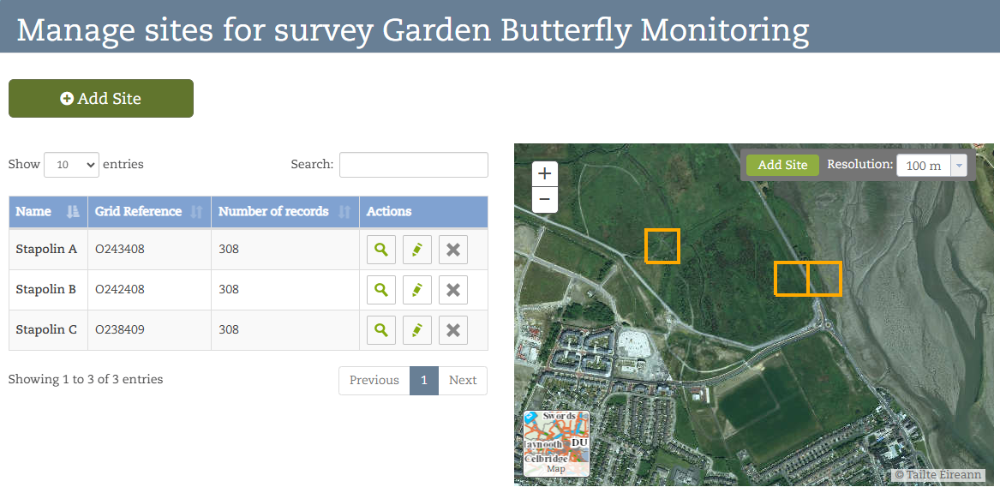
I joined the Irish Butterfly Monitoring Scheme run by the National Biodiversity Data Centre in 2024. My focus was three sites along a walking route in Baldoyle Racecourse.
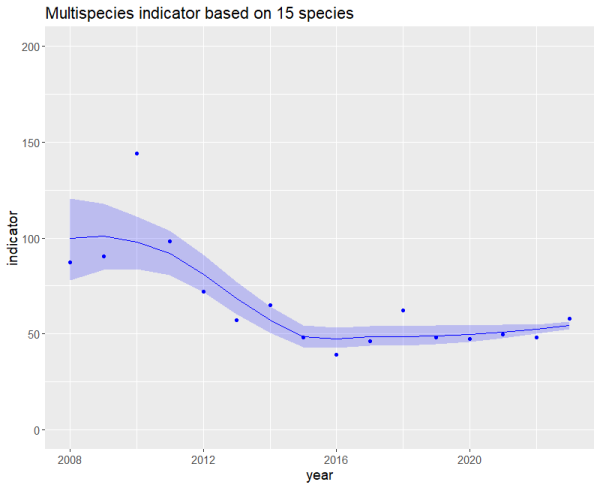
Butterfly populations have declined 55% since 2008, so I wanted to see what impact this may have in a protected flood plain, but one surrounded by significant housing development (and disturbance).
Methodology
Three sites were selected for monitoring. At each site, a 5 x 5 x 5 metre area was surveyed over a 15 minute period, counting any butterflies that entered the monitored zone. Where possible, I did counts at similar times of the day. Count days required a minimum temperature of 17’C (temperature was recorded from Predict Weather). Cloud cover and windspeed was also recorded in general terms. Where possible, counts were done every two weeks.
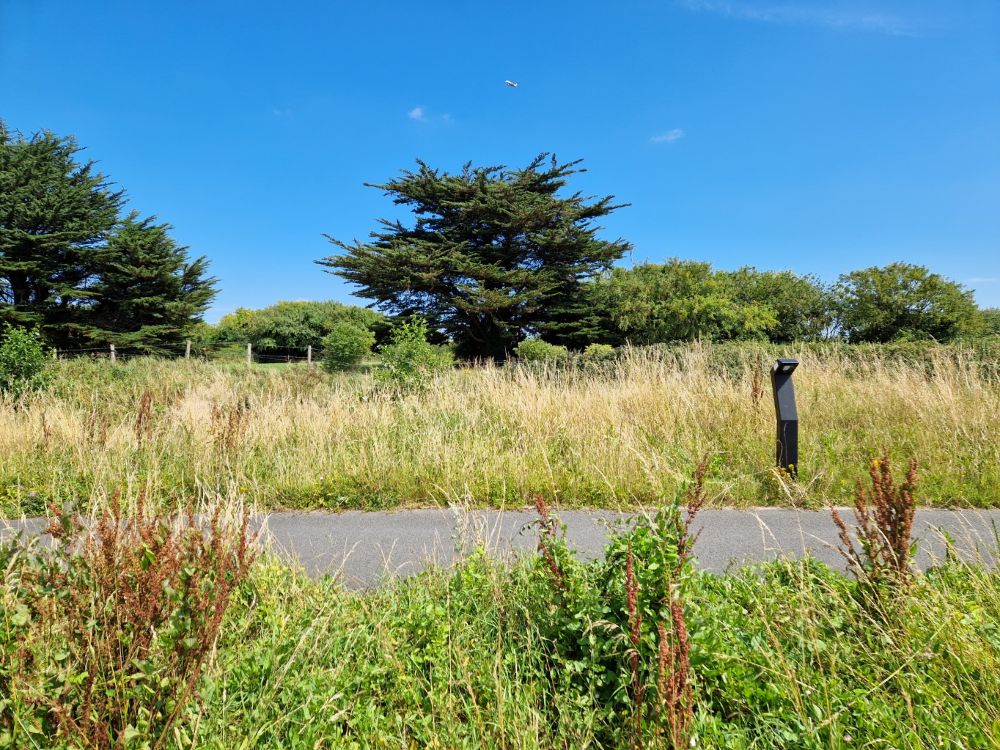
Site 1: A small hollow along the the Baldoyle Greenway. The most exposed and most trafficked site.
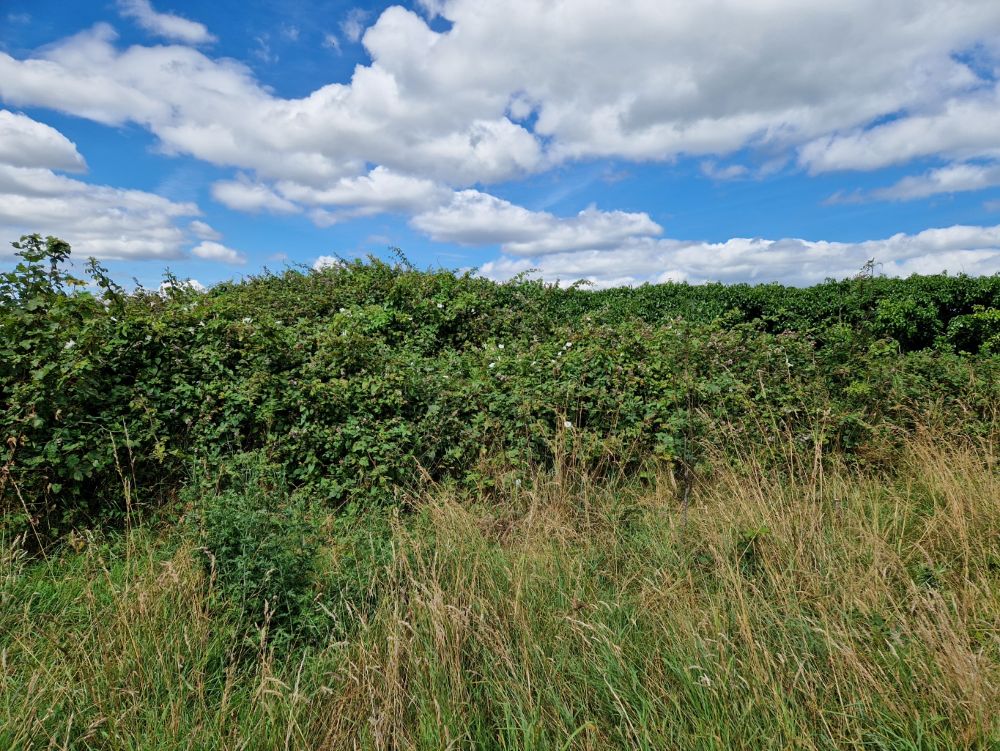
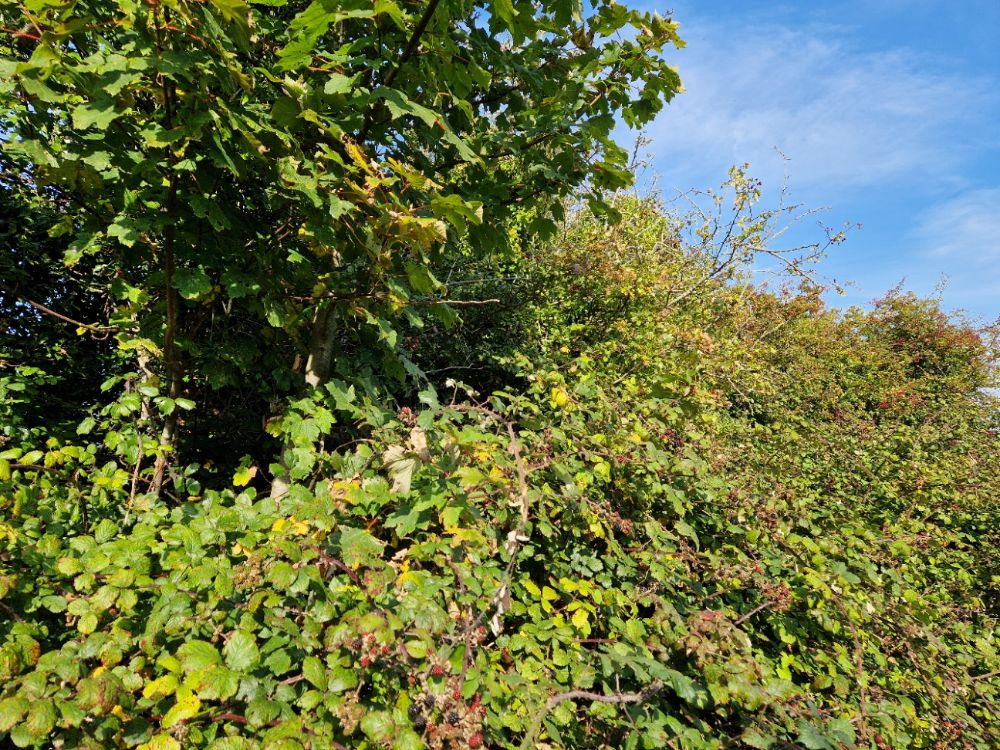
Site 3: A bank of bramble next to a small path. Sheltered and south facing – a bit of a sun trap.
Counts were submitted to a central database.
Results
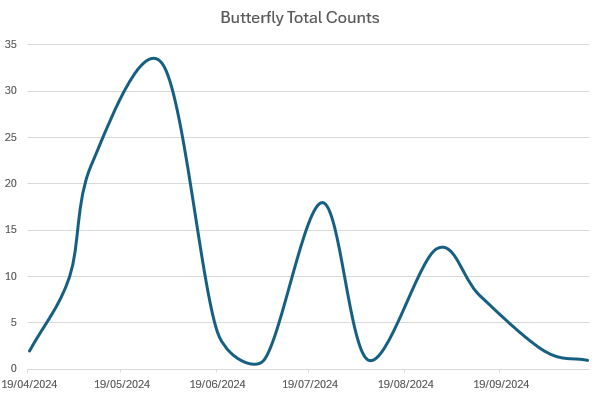
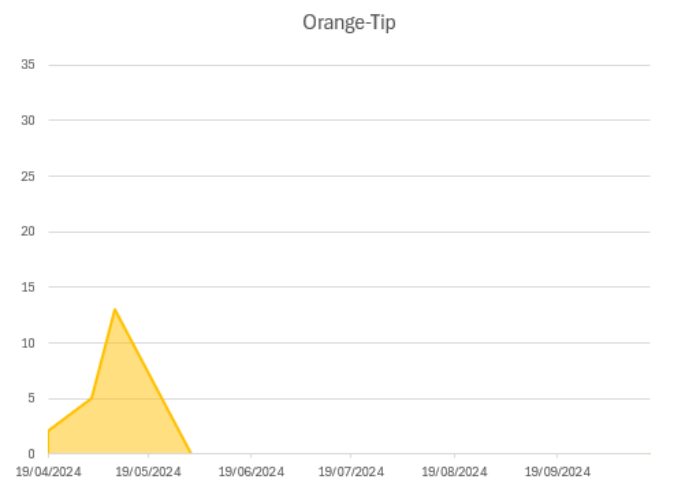
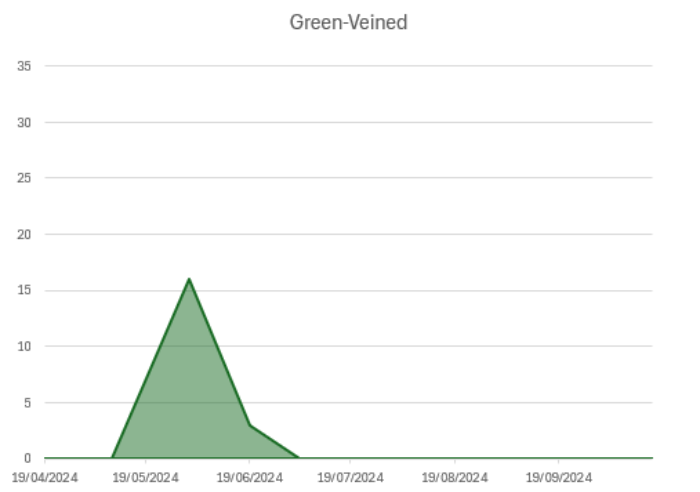
There were three distinct cycle peaks for butterflies, with species common in May being the most populus.
Otherspecies
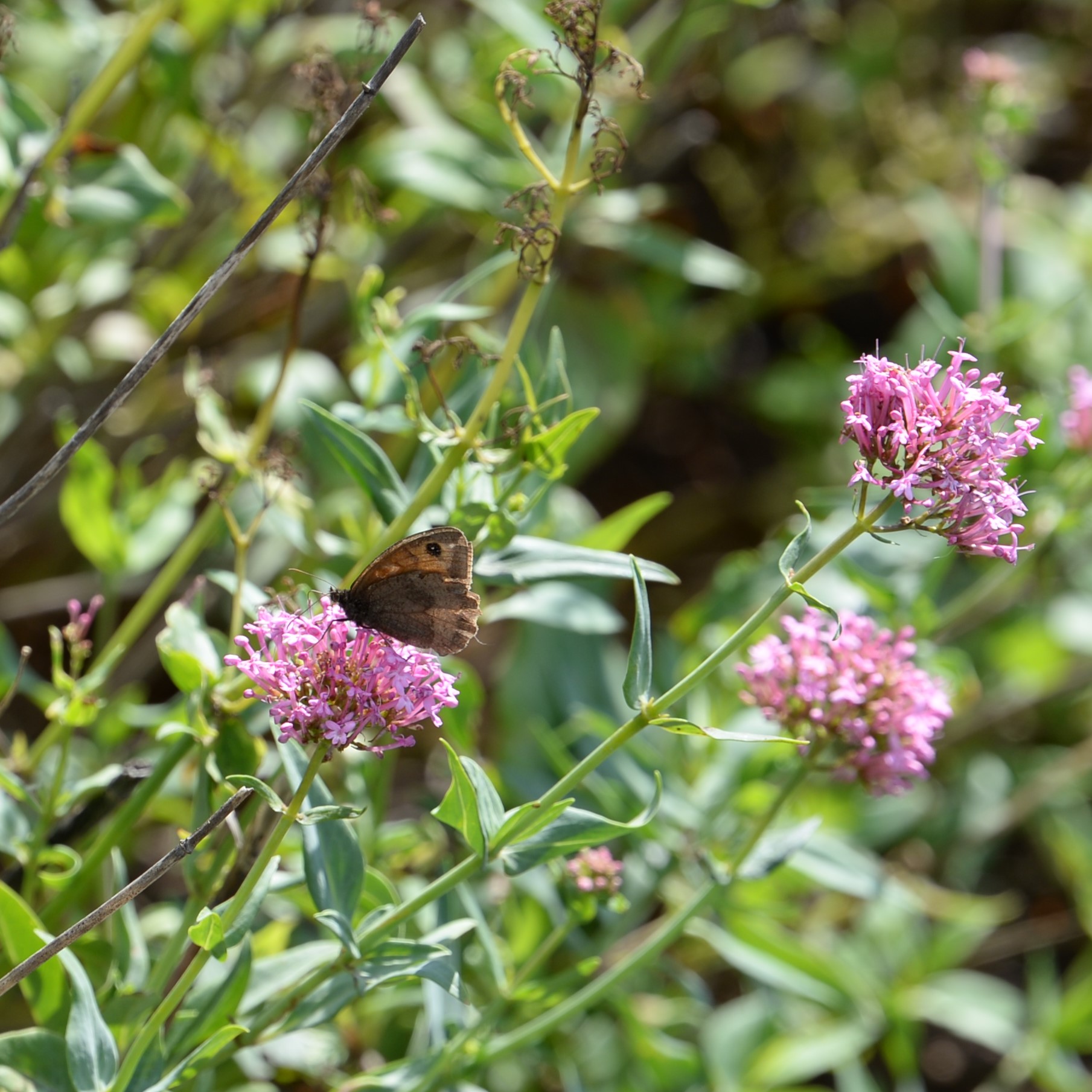
The next cohort of Meadow Brown, Common Blue, Holly Blue, Large White and Small Heath butterfly had counts between 5 and 7 for the season; not high, but enough to register a presence.
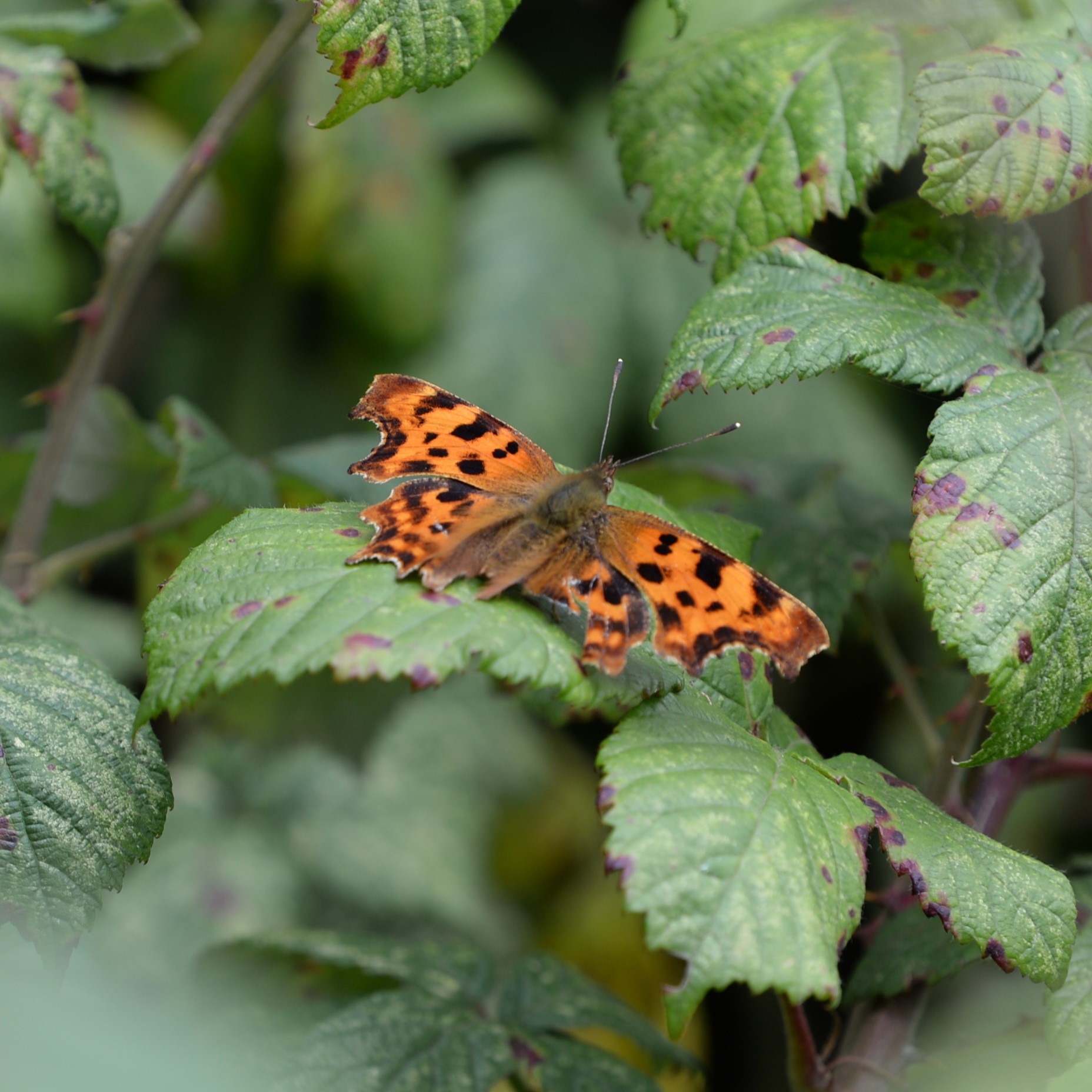
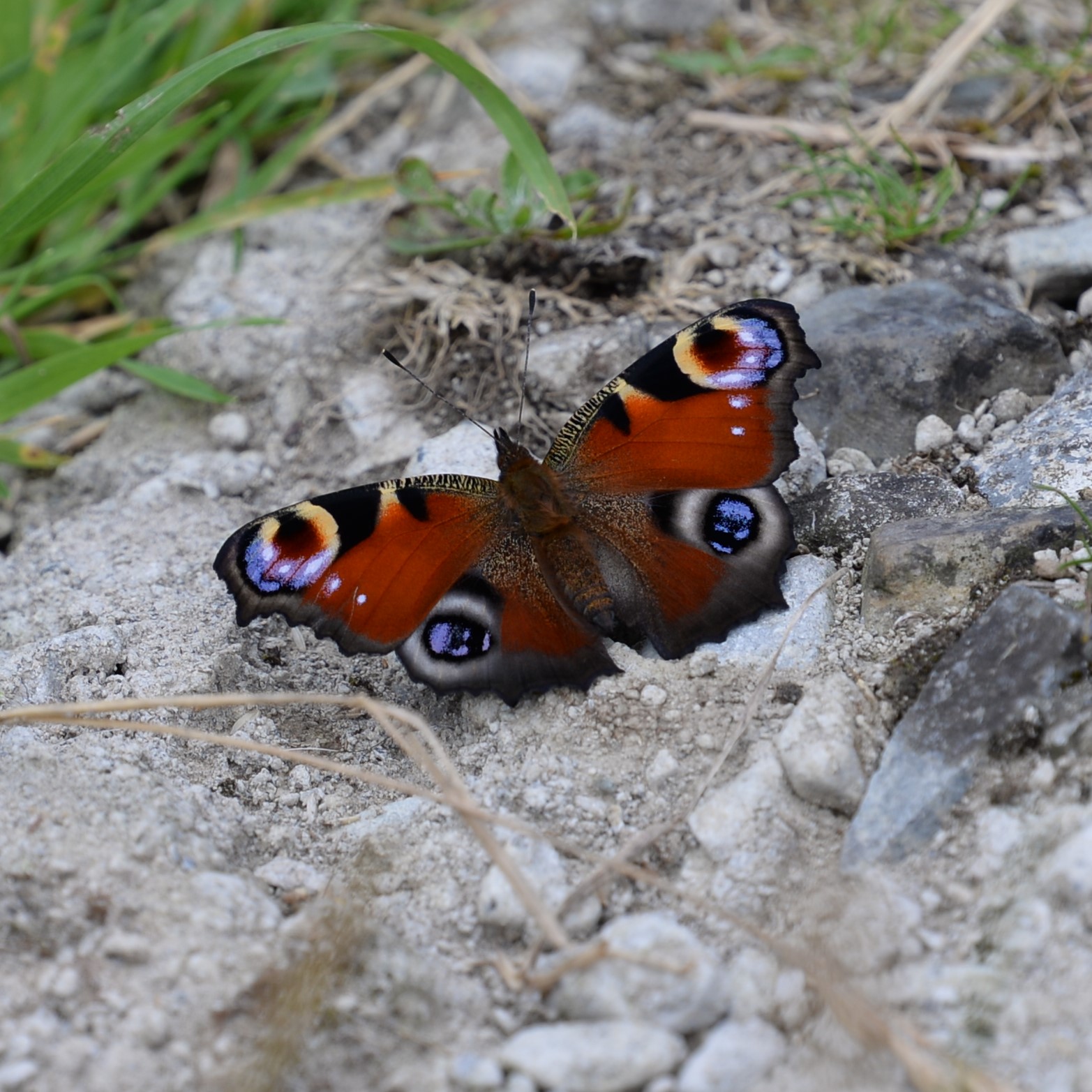
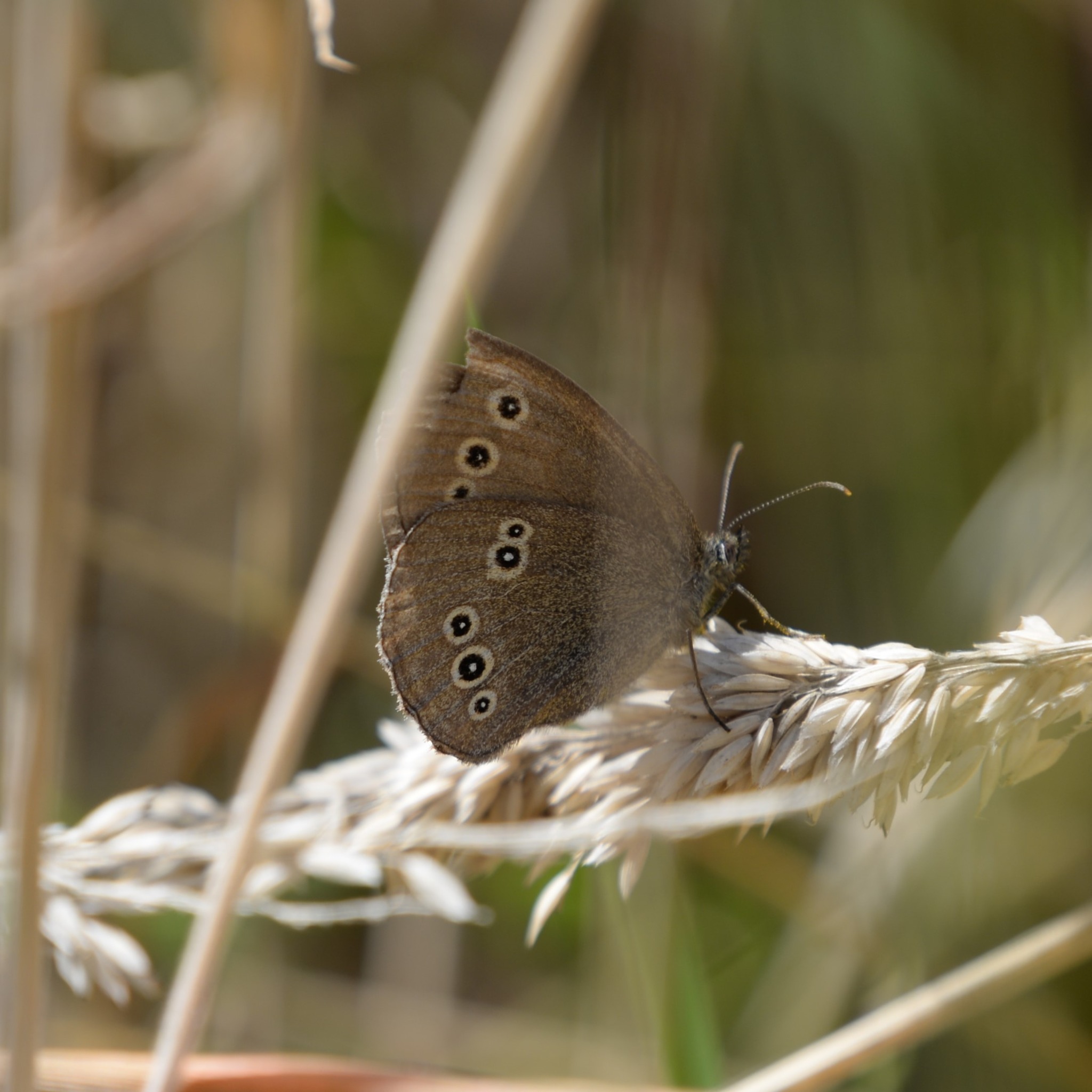
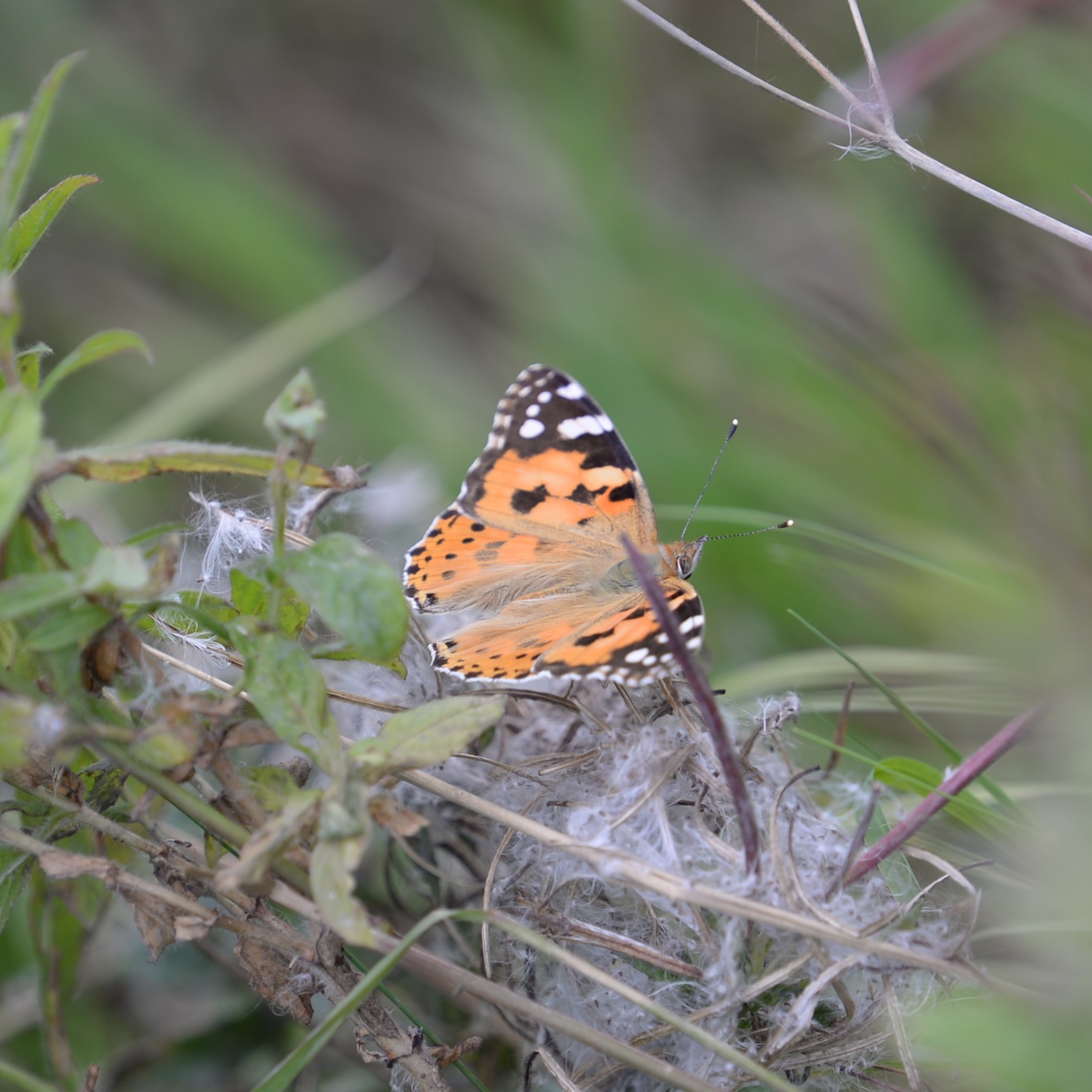
For total counts below five we had Wood White (which I think may have been misidentified, as apparently they are restricted to the Burren in Ireland) - so are likely Green Veined, then Ringlet, Peacock, Small Tortoiseshell and Red Admiral.
Discussion
Without having a baseline from previous years it’s hard to know if butterfly populations at Baldoyle Racecourse were deemed ‘good’ or ‘poor’. Butterflies were recorded from April through to October, and a broad range of species were recorded. Irish species recording large declines into 2024 were Green-veined White, Large White, Orange-tip and Small White; Green-veined have declined 82% since 2008, but this species was the one of the most numerous at the Racecourse.
Site 3 was the most prolific site for butterfly sightings. It was mostly bramble, but had a south facing aspect, and was sheltered from the wind. Site 1 was along the Greenway, was definitely windier and had the fewest butterfly sightings, although the Greenway itself did support respectable numbers of Meadow Brown butterflies, which didn’t feature so much in my counts. Site 2 didn’t support many butterfly sightings and its position next to an open field may have contributed to this.
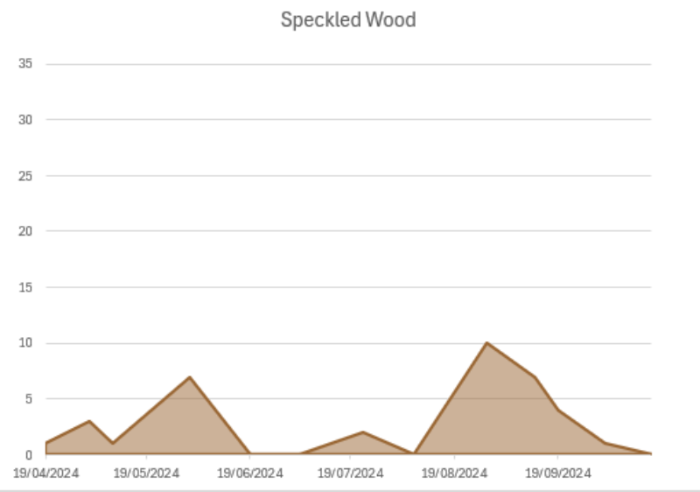
The six most common butterfly species reported in the country for 2024 were the Meadow Brown, Speckled Wood, Ringlet, Small Tortoiseshell, Peacock and Green-Veined White in that order. For the Racecourse, the top six were Speckled Wood, Orange Tip, Green Veined, Holly Blue, Meadow Brown and a tie for Large White, Small Heath and Common Blue. So even if total butterfly counts were low, Baldoyle Racecourse is a key site for endangered butterflies in Ireland.
Rainfall plays a big role in the butterfly cycles, and high rainfall can have a significant negative impact on butterfly numbers, so it’s possible the frequency of my counts may have missed population peaks. There was also a period in July and August when travels had prevented me from doing counts on a bi-weekly basis.